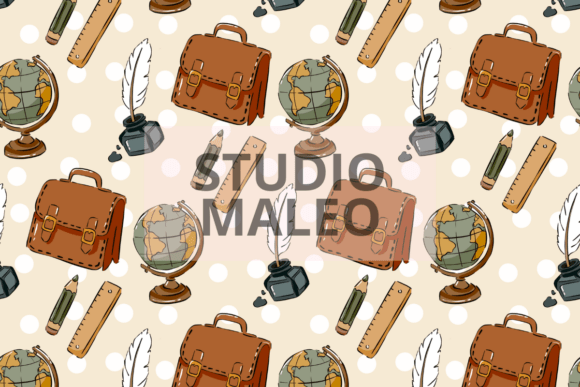
The Timeless Appeal of Vintage Back to School Seamless Pattern in Modern Design
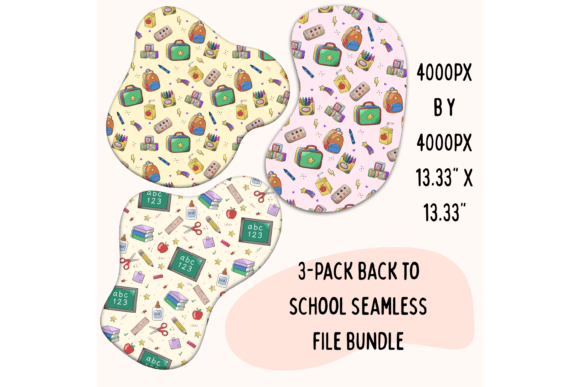
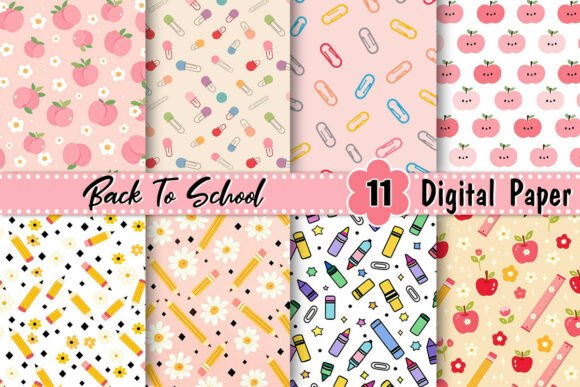
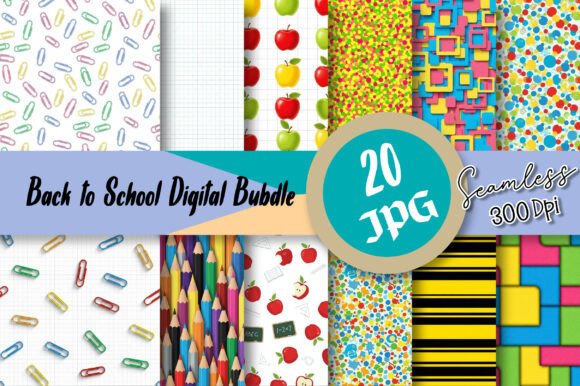
In an era dominated by digital minimalism and sleek interfaces, there remains a profound resonance with the tactile warmth of the past. This nostalgia is not merely a fleeting trend but a deep-seated appreciation for craftsmanship and history. Central to this aesthetic revival is the Vintage Back to School Seamless Pattern, a design element that bridges the gap between historical academic traditions and contemporary creative needs. By integrating classic imagery such as leather satchels, globes, inkwells, quills, pencils, and rulers into a continuous, repeating layout, designers create a visual language that speaks of knowledge, exploration, and the enduring spirit of learning.
This article explores the multifaceted nature of retro hand-drawn back-to-school seamless patterns, examining their construction, their diverse applications across various industries, and why they continue to captivate educators, hobbyists, and business owners alike. The following sections will delve into the specific characteristics of these designs, their practical utility in fabric and stationary production, and the psychological impact of nostalgic educational motifs.
Deconstructing the Retro Hand-Drawn Aesthetic
To understand the value of a Vintage Back to School Seamless Pattern, one must first appreciate the artistry involved in its creation. Unlike modern vector graphics which often rely on sharp angles and perfect symmetry, these patterns embrace the imperfections of hand-drawn illustration. The lines are slightly organic, the shading possesses a grainy texture reminiscent of old paper, and the color palettes are muted, drawing from earth tones like sepia, faded sage, mustard yellow, and deep burgundy.
- The Leather Satchel: Often serving as the anchor of the composition, the satchel represents the journey of education. Its depiction usually highlights worn leather textures and brass buckles, evoking a sense of durability and the weight of knowledge carried by students over generations.
- The Globe and Quill: These elements symbolize global awareness and the act of recording history. In a seamless pattern, they provide a sense of movement and intellectual curiosity, suggesting that learning is an endless exploration.
- Inkwells and Rulers: The inclusion of writing tools like inkwells and wooden rulers grounds the design in the physical reality of traditional schooling. They add geometric balance to the organic curves of the other items, creating a harmonious visual rhythm.
The seamless nature of the pattern is crucial. It allows the design to tile infinitely without visible breaks, making it versatile for large-scale applications. Whether wrapping around a roll of fabric or covering a sheet of notebook paper, the continuity ensures that the narrative of vintage education flows uninterrupted.
Applications in Fabric and Nursery Decor
One of the most significant markets for the Vintage Back to School Seamless Pattern is the textile industry. High-quality fabrics featuring these designs have found a permanent home in nursery decor and children's clothing. Parents and interior designers often seek out materials that tell a story, and nothing tells a more universal story than the shared experience of going to school.
When used in nursery settings, these patterns transform a room into a space that encourages intellectual growth from a young age. Curtains, bedding, and wall hangings adorned with hand-drawn globes and pencils create a cozy, library-like atmosphere. The soft, nostalgic colors prevent the room from feeling sterile, instead offering a warm embrace that feels both safe and stimulating.
Beyond the nursery, this aesthetic has permeated adult fashion and home accessories. Tote bags, aprons, and even upholstery fabrics featuring the retro motif appeal to those who appreciate artisanal goods. The "perfect for vintage education" tagline is not just marketing; it reflects a genuine desire for products that honor the classics. For professionals in the textile sector, sourcing high-quality seamless patterns is essential for maintaining brand consistency and ensuring that the final product retains the intricate details of the original hand-drawn artwork.
Elevating Academic Stationary and Teacher Gifts
The realm of academic stationary offers another fertile ground for the application of these designs. From the moment a student opens a new notebook to the time a teacher writes on a chalkboard, the visual environment plays a role in cognitive engagement. A Retro hand drawn back to school seamless pattern applied to notebooks, planners, and sticky notes adds a layer of personality and charm that standard solid colors cannot match.
For educators, receiving gifts decorated with these motifs can be particularly touching. It acknowledges the profession's roots while celebrating the timeless dedication required to teach. Custom journals, folders, and pens wrapped in packaging featuring leather satchels and inkwells serve as excellent teacher gifts. They convey respect for the craft of teaching and the importance of the tools used to facilitate learning.
Business owners in the stationery market can leverage these designs to differentiate their products in a crowded marketplace. Consumers are increasingly looking for items that offer an emotional connection. A planner covered in a seamless pattern of vintage school supplies does not just organize a schedule; it invites the user to step into a world of thoughtful planning and structured creativity. The use of high-quality printing techniques ensures that the "high quality nostalgic school supplies design" translates faithfully to the physical object, preserving the texture and depth of the original illustration.
Considerations for Creators and Researchers
For creators, researchers, and hobbyists working with these patterns, understanding the technical and artistic nuances is vital. The process of digitizing a hand-drawn sketch into a seamless vector requires a keen eye for detail. The alignment of the tiles must be precise so that when the pattern repeats, the leather satchel or the ruler does not appear cut off in an awkward manner.
Researchers studying the evolution of educational iconography will find these patterns rich with data. The shift from quills to pencils, and from inkwells to fountain pens, mirrors the technological advancements in society. By analyzing the prevalence of certain elements in different eras of design, one can trace the cultural shifts in how we view education. Is the globe still prominent? Yes, because the desire for global citizenship remains constant. Has the satchel been replaced by backpacks? Occasionally, but the satchel persists in design because it carries a romanticized ideal of the scholar.
Hobbyists engaged in scrapbooking, card making, or DIY crafts also benefit from using these seamless patterns. Digital downloads of high-resolution images allow individuals to print custom labels, gift tags, and decorative elements for personal projects. The versatility of the format means that a single file can be scaled up for a banner or down for a sticker, maintaining clarity at any size.
The Psychology of Nostalgia in Education
Why does the Vintage Back to School Seamless Pattern resonate so deeply with such a broad audience? The answer lies in the psychology of nostalgia. For many adults, the concept of school is tied to memories of discovery, friendship, and the structure of routine. While the actual experience of school varied widely, the symbols associated with it—rulers, globes, and satchels—remain universally positive icons of growth.
Using these visuals in modern contexts provides a sense of stability and continuity. In a rapidly changing world where technology evolves every few years, the image of a wooden ruler or a leather-bound book offers a comforting reminder of enduring values. It suggests that despite the digital revolution, the fundamental act of learning remains unchanged. This sentiment is particularly powerful for educators who wish to instill a love for learning in students who may be more accustomed to screens than books.
Furthermore, the "retro" aspect taps into a broader trend of valuing sustainability and longevity. Vintage-style designs imply that objects should last, contrasting with the disposable culture of fast fashion and cheap stationery. When consumers choose products featuring these high-quality nostalgic designs, they are often making a conscious decision to support craftsmanship and timeless style over temporary trends.
Implementing the Design in Professional Contexts
For businesses looking to incorporate these patterns into their branding, the possibilities are extensive. Schools might use them for promotional materials, uniforms, or classroom decorations to foster a sense of community and tradition. Educational institutions aiming to highlight their history or heritage can utilize the Retro hand drawn back to school seamless pattern in brochures and websites to evoke a sense of established prestige.
In the corporate world, companies selling educational software or online courses can use these visuals to humanize their platforms. A landing page featuring a subtle background of vintage school supplies can make the learning experience feel more accessible and less intimidating. The key is to balance the vintage aesthetic with modern usability, ensuring that the text remains legible and the call-to-action buttons stand out against the busy pattern.
Designers must also consider the color theory behind these patterns. The muted, earthy tones typical of vintage illustrations work well in environments where focus is required. They do not compete aggressively with content but rather provide a supportive backdrop. This makes them ideal for long-form reading materials, textbooks, and educational apps where visual fatigue is a concern.
Future Trends and the Evolution of Educational Motifs
As we look toward the future, the Vintage Back to School Seamless Pattern is likely to evolve rather than disappear. We may see hybrid designs that blend traditional elements with futuristic touches, such as a leather satchel equipped with a digital tablet or a globe displaying holographic data. However, the core essence of the design—the celebration of learning through tangible, historic objects—will remain intact.
The demand for personalized and unique educational materials continues to grow. As parents and teachers seek ways to make learning engaging and memorable, the integration of artistic, nostalgic elements becomes a strategic advantage. The ability to customize these seamless patterns allows for endless variations, ensuring that the design stays fresh and relevant for each new generation of users.
In conclusion, the intersection of history, art, and education creates a powerful synergy in the form of the vintage back-to-school seamless pattern. It is more than just a decorative element; it is a bridge connecting the past to the present, reminding us of the joy of discovery and the value of knowledge. Whether used in fabric for a nursery, printed on a notebook for a student, or featured on a website for an educational institution, this design continues to inspire, educate, and delight. Its enduring popularity is a testament to the timeless nature of the subjects it depicts and the universal human desire to learn.